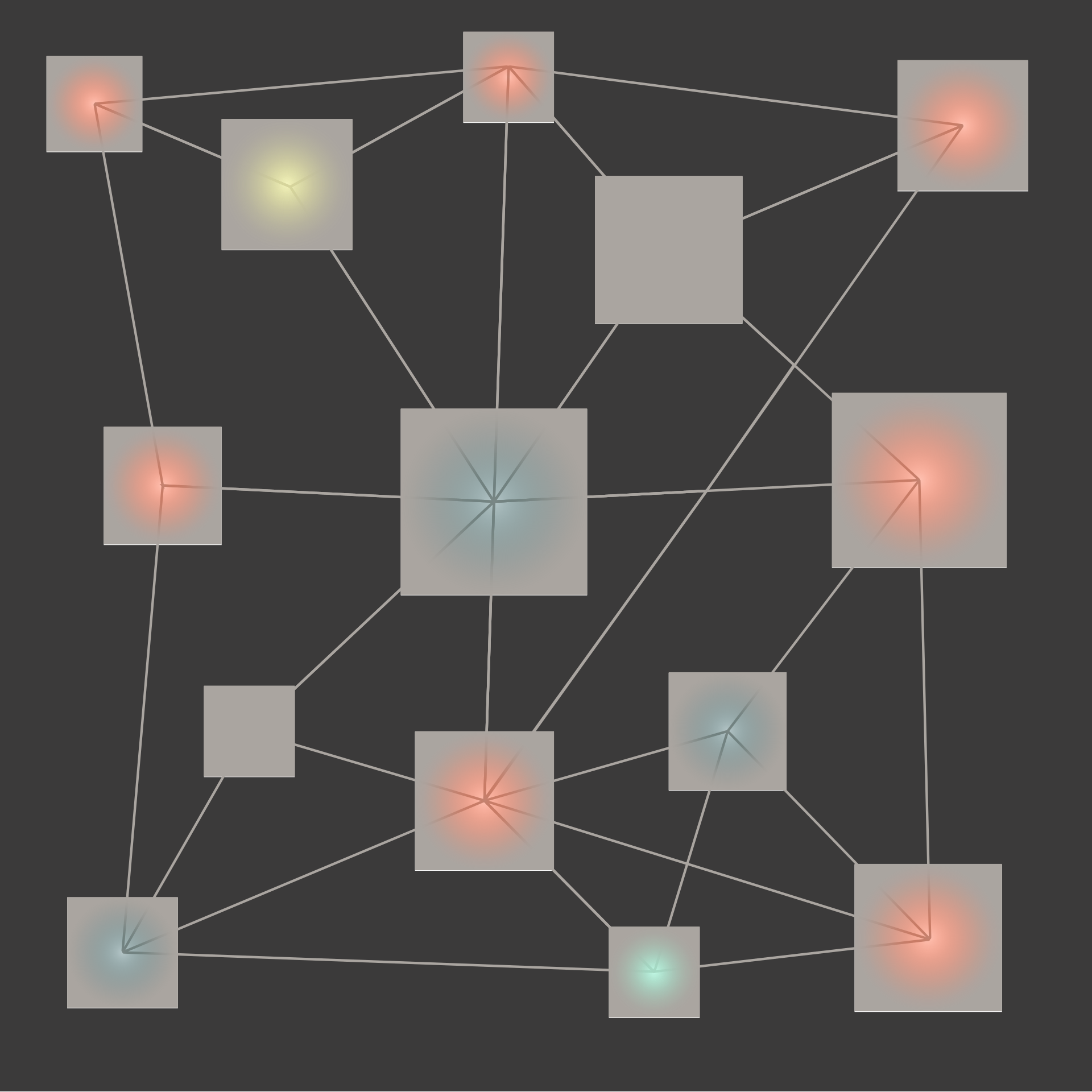
The path from spatial vision to realisation crosses layers that were not designed to connect.
Every creative initiative must navigate four separate governance layers - alone, without a map, and without a guide.
Spatial data, land-use designation, regulatory conditions, and administrative procedure are managed by different institutions and encoded in different systems. Connecting them requires knowledge that is rarely documented and time that most initiatives cannot afford.
Creative Vision for Space
Where the idea lives. A spatial vision carries requirements - scale, duration, infrastructure, noise - that must be translated into the institutional language of each layer above it. Without that translation, the idea cannot move forward.
Land-Use
Every space has a legal designation: public street, green area, protected zone, or privately-owned land. These designations determine what is possible - and who has the authority to grant it.
Regulations
Conditions of use - noise thresholds, safety requirements, environmental protections, event ordinances - are encoded in legislation that varies by space type, activity, and administrative district. These conditions are enforceable and consequential, but seldom consolidated in one place.
Administrative Processes
Permit processes are distributed across multiple public authorities, each with its own jurisdiction, timeline, form logic, and expectations. Applications that do not anticipate these requirements correctly are delayed, returned, or rejected - placing the burden of institutional knowledge on the applicant.